


The Labor Department reported 115,000 jobs added in April. Markets liked it. But talk to anyone actually looking for work and they’ll tell you nobody’s hiring. So which is it? Here’s what most people don’t know about how these numbers get made. The BLS releases an initial number on the first Friday of the following month. That’s the one the media runs with. What gets less attention: there’s a first revision 30 days later, a second at 60, and a benchmark revision the following year. In 2024, after all those revisions, the original numbers were off by 818,000 jobs. That’s not a rounding error. That’s a story nobody went back to cover.
And even if the headline number holds up, it doesn’t tell you what kind of jobs are being counted. Most of the recent growth is in government, healthcare, and education. Those are real jobs, but they don’t generate the private-sector activity that drives office demand, housing demand, or small business expansion. Two part-time jobs replacing one full-time job still shows up as job growth. A gig driver picking up a second delivery route counts too. The headline counts jobs. It doesn’t count whether those jobs are enough.
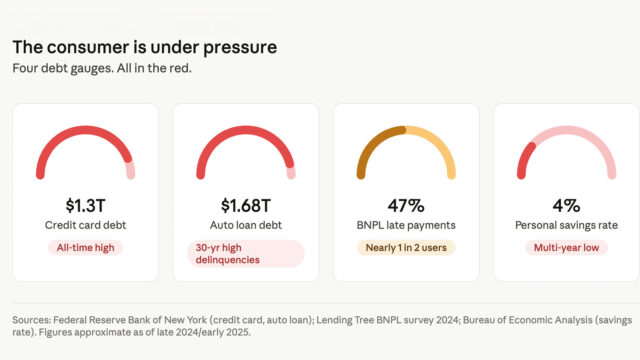
The consumer balance sheet tells a different story than the jobs report does. Credit card debt hit $1.3 trillion, an all-time high. Auto loan delinquencies are at a 30-year high. Nearly half of all Buy Now Pay Later users missed at least one payment last year. The personal savings rate sits at 4%. These aren’t the numbers of a financially healthy workforce. They’re the numbers of people who are employed but stretched. Inflation permanently raised the cost of housing, insurance, utilities, and groceries.
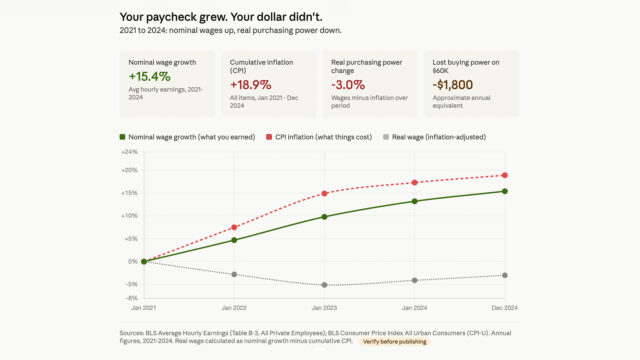
Wages rose 15.4% between 2021 and 2024. Inflation rose 18.9%. Real purchasing power dropped 3%. For a household earning $60K, that’s roughly $1,800 in lost annual buying power.
There’s also something happening in corporate layoffs that deserves more attention. Amazon cut 14,000 corporate jobs. Citigroup cut 20,000. These aren’t delivery drivers laid off because business slowed. These are accountants, HR, marketing, management. The business isn’t shrinking; those companies just don’t need as many people anymore. That’s AI adoption showing up in payroll data, and companies like Amazon tend to move first. For real estate investors, the practical question is which cities have concentrated employers moving in that direction, and which don’t. Downtown Seattle looks different than a healthcare corridor in Texas right now. The jobs number matters. But it’s one data point. What’s underneath it matters more.
