


Ken and Danille walk through why the shift from ownership to subscription culture is the most important financial decision most people aren’t paying attention to.
The American dream used to mean owning things. A house. A car. A stereo system your dad saved 2 years to buy. Now it means paying $15/month for music, $17 for streaming, $200 for AI tools, and $0 toward anything that actually builds wealth. The shift happened gradually, starting with music. Apple let you buy songs first, then quietly switched to subscriptions. Netflix replaced Blockbuster. Buy Now Pay Later replaced the savings account. And now you can finance a cup of coffee. Every business figured out that a monthly payment is easier to say yes to than a purchase price. The result: people have more access to more things than ever, while owning less than any generation before them.
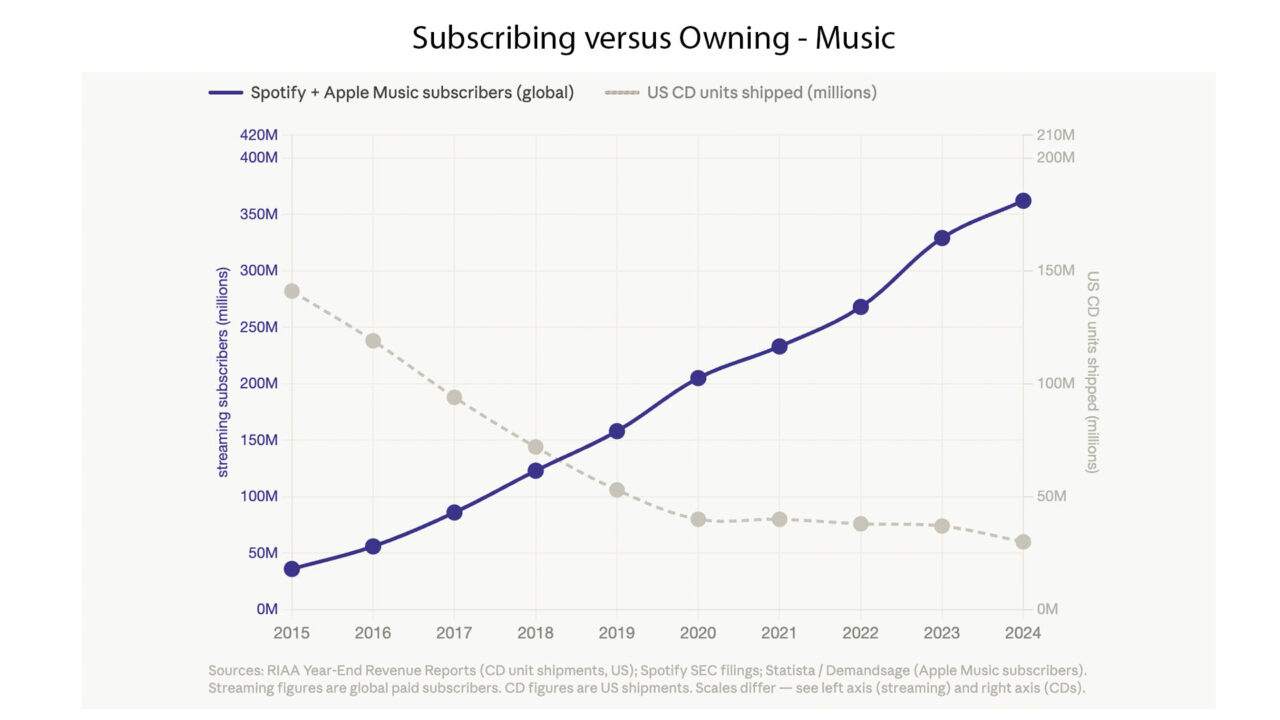
The math is brutal. The average American is hemorrhaging hundreds of dollars a month on subscriptions, often without realizing it. That $50 here and $100 there isn’t just money gone. It’s the down payment that never gets saved, the rental property that never gets bought, the asset that never appreciates. Inflation runs at 2-4% per year. In 30 years, that’s 60%+ in asset appreciation you either captured or didn’t. The people who bought real estate a decade ago, even modestly (5 houses, not 50), are watching tenants pay off their mortgages while they sleep. The people who subscribed to everything own nothing.
The trap is psychological as much as financial. Ownership used to feel necessary. Now it feels optional. Why buy when you can rent? Why save when you can finance? The system is designed to keep you in that loop, because your monthly payment is someone else’s asset. Credit cards in the early 2000s were the beginning. Now it’s AI tools, SaaS platforms, and cashless coffee shops that won’t even let you break the cycle with the cash in your pocket. The discipline required to say no to the subscription and yes to the investment is genuinely hard. But so is working a second job at 75 because you never owned anything that pays you back.
The choice is simple, even if it isn’t easy. Own something that goes up with inflation, or spend your life renting everything, including your retirement. A paid-off house means your Social Security check covers groceries and vacations instead of rent. A rental property means the tenant builds your net worth while you sleep. The window to get on the right side of this is narrowing. Fewer people will own assets over time, which means the ones who do will benefit more. Cut a subscription. Start a down payment fund. The subscriptions will always be there. The deals won’t.
